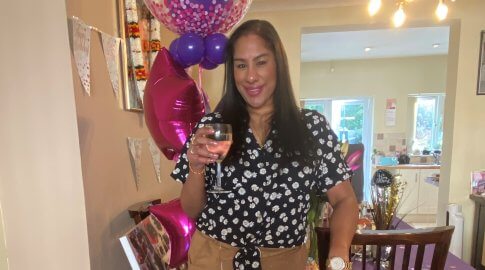
“The BPA wasn’t as frightening as it sounds on paper”
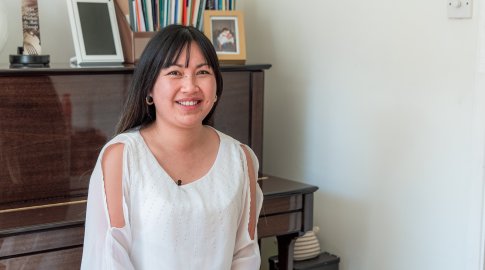
Christine Tabor underwent two balloon pulmonary angioplasty (BPA) procedures at Royal Papworth Hospital. We caught up with her soon after both to hear how they went…
Three weeks after the first procedure
“I was nervous when the BPA was first mentioned but the consultations I had with Papworth were very reassuring. It took around four months from the referral to having the procedure. They did my left lung this time, and my right lung will be done in my second session in four weeks’ time. They were able to clear five blockages, which they were pleased with, so that was a relief. I do know there are smaller blockages in inaccessible area of my lungs which they won’t be able to get to.
It’s been three weeks and I personally don’t feel any improvement yet, but it may just take more time for me.
I was in hospital for two nights. On the first day I had a series of tests, including an echocardiogram and a walking test, and the procedure took place around lunchtime on the second day. I expected it to be a bit more uncomfortable than it was to be honest. The whole thing took about an hour-and-a-half, and I had no bruising or problems with my groin, where the catheter was inserted. I felt fine afterwards.
The only problem I had was holding my breath. You have to hold your breath regularly when instructed by the doctor while the procedure is taking place and I kept taking big gasps which made it harder for me to hold onto my breath. Once I took smaller breaths, I could hold my breath for longer, which helped with the procedure.
The BPA wasn’t painful and I found it less uncomfortable than the right heart catheter procedures which I’d previously had via my neck.
I had full trust in the team doing the procedure and I didn’t worry about things going wrong. They were wonderful the whole time I was in the hospital.
After the procedure I was taken back to the ward where I had to lie flat for an hour and have regular blood pressure and oxygen checks before being allowed to sit up.
My husband came to Cambridge with me and stayed in hospital accommodation in the grounds. It cost about £65 a night, and it was reassuring to know he was close.
I was discharged on the Friday night, the day after the procedure, and it was a four-hour journey back home to Stockport. I’ve felt tired since, but I think that’s to be expected.
Ultimately, the BPA wasn’t as frightening as it sounds on paper and to be honest, it’s probably one of the best hospital experiences I’ve had. I feel privileged to have been offered such a pioneering procedure.
I feel better about having the other lung done now that I know what to expect. I’m realistic, and I’m not expecting miracles, but I will be very happy if I see some improvement with my symptoms. I’d love to feel a little bit more like I did before I got this diagnosis.”
Shortly after the second BPA
“My second BPA at Papworth took place exactly a month after my first one. I wasn’t as nervous as the first time and I’m very happy to say that the doctors were able to successfully unblock five blockages in my right lung. Once any inflammation dies down, I’m hoping to feel some real benefits from the procedures. My third and final appointment at Papworth will be in three months’ time to check on my progress and I am feeling quite optimistic.
My main message to anyone who is experiencing something similar to me, is not to be fearful and have confidence in the professional teams at both Sheffield [my specialist centre] and Papworth hospitals. “
Balloon pulmonary angioplasty is a treatment suitable for some people with chronic thromboembolic pulmonary hypertension (CTEPH), with the aim of clearing the clots that cause this type of PH.
The procedure is performed under local anaesthetic, with medication used to numb the area of the groin. A small tube called a catheter is inserted through a vein in the groin and guided up to the pulmonary arteries. A balloon is then inflated in the segments that require treatment. The vessels (clots) needing treatment are identified by injecting a contrast dye while using X-ray imaging.
The procedure typically requires between two and six sessions that each last approximately 90 minutes. A hospital visit with overnight stay is required for each session. Royal Papworth Hospital is the only hospital in UK that carries out the procedure, and it has only been available since 2018.