“PH has shaped the person I am today”
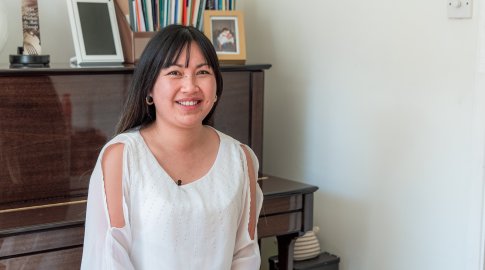
Algerian Bendjaada Rim was diagnosed with pulmonary hypertension at the age of 12, and she is keen to share her story with PH communities around the world. These are her words.
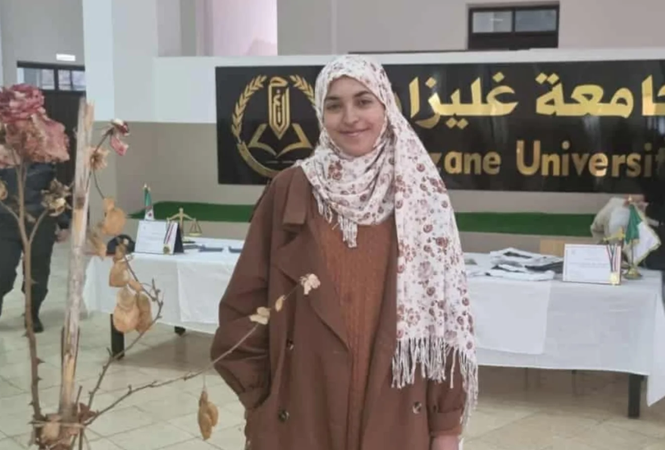
“I am living in Algeria with a very rare form of PH known as Pulmonary Veno-Occlusive Disease (PVOD). I am currently 22 years old. I was diagnosed in 2017, when I was around 12. Before that, I lived a completely normal life, like any child my age – full of energy, enjoying life, playing, and studying without any unusual symptoms. But at some point, everything began to change.
I started experiencing extreme fatigue, a rapid heartbeat, and shortness of breath. I lived on the fifth floor of a building, and simply reaching my home would leave me completely breathless. Soon, I became visibly pale and lost my appetite to the point that even small amounts of food would make me nauseous. All I wanted to do was sleep.
My academic performance was slightly affected at first, but I managed to recover for a while – until I eventually collapsed physically. My parents, despite being doctors, initially struggled to understand what I was going through. They began with medical tests, suspecting a digestive issue due to my symptoms, but everything appeared normal. It was only during an echocardiogram that a doctor noticed an abnormal enlargement in the right ventricle. We were then referred to a cardiologist, and the diagnosis was confirmed: my pulmonary pressure was extremely high.
It was a shock, especially for my parents. As for me, I was still very young and could not fully grasp the reality of what I was facing. What followed was a very difficult journey, made even harder by the fact that this disease is extremely rare and not widely recognised in my country of Algeria. This led to a serious lack of access to treatment.
Out of more than 14 medications available worldwide, only two are accessible in Algeria. Most patients receive the same limited treatment, along with supportive medications that do not directly address the disease.
Even with relatively decent medical infrastructure, expertise remains limited. Some healthcare professionals are not fully familiar with diagnosing or managing this condition due to its rarity. As a result, many patients are diagnosed at advanced stages, making treatment significantly more difficult.
Understanding all of this at such a young age was not easy. Explaining my condition over and over again, facing different reactions – from empathy to indifference – was a challenge in itself.
Despite everything, I consider myself fortunate. Today, I am a university student specialising in Food Science and Quality Control Technology, and I am close to graduating. I take every opportunity to raise awareness about this disease and advocate for patients like me. I truly believe that our voices will be heard.
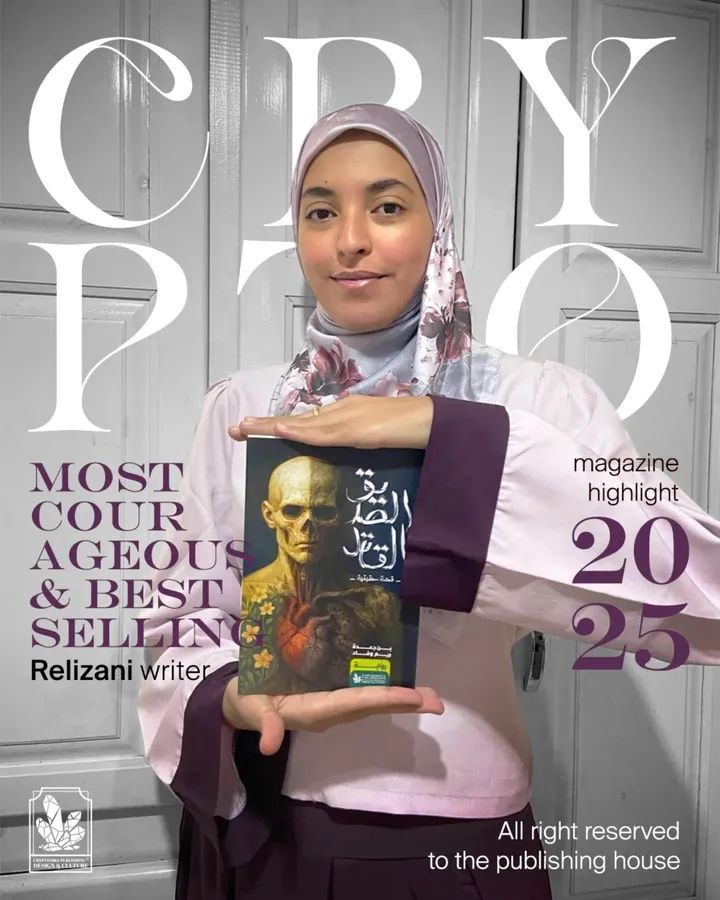
One of my proudest achievements is writing a book in which I shed light on this condition – its challenges, its realities, and the lessons it has taught me. I titled it “The Killer Friend”, reflecting the paradoxical nature of this illness – painful, yet transformative.
I cannot deny that it has changed my life and taken many things away from me. But at the same time, I am grateful, because it shaped the person I am today.”