GLP-1 (weight loss) injections and PH
They’re rarely out of the headlines, and we know these injections are of interest to many in our PH community. This feature brings you the facts, expert insight, and real experiences from people living with pulmonary hypertension who have taken this route for weight loss.
Published summer 2026. All information correct at the time of publication.
You probably hear them referred to as ‘weight loss jabs’, but the official name for these medications is glucagon-like peptide-1 receptor agonists (or GLP1-s, which is much less of a mouthful!)
There are a few different types of GLP-1 medications, but they all work in a similar way by mimicking a natural hormone your body releases after you eat, helping you feel fuller for longer. Some also act on a second hormone (glucose-dependent insulinotropic polypeptide – or GIP) which is involved in appetite and blood sugar control, and can further support weight management.
GLP-1s are usually taken as a once-weekly injection using a pen device that you administer yourself at home. In the UK, there are strict criteria about who can access them through the NHS. A higher BMI* on its own isn’t always enough – you also need to meet certain additional health criteria linked to weight.
Some people choose to access GLP-1 medications through online pharmacies, where the eligibility criteria may be different. Even so, you’ll need to show that your BMI is over 30. This is because there is not yet enough evidence to confirm that these medications are safe and appropriate for people with a lower BMI.
Whilst there are no direct interactions between PH medications and GLP-1s (meaning your PH drugs will not react to the GLP-1s in the body) there is still lots to consider.
This feature aims to bring you tailored advice and information, to help you decide whether these medications might be worth exploring for you.
*BMI stands for Body Mass Index, a numerical value derived from someone’s weight and height to categorise them as underweight, at a healthy weight, overweight, or obese.
Important information: GLP-1s are prescription-only medicines, meaning they can only be prescribed by a healthcare professional. It can be dangerous to purchase these drugs through unregulated sellers such as beauty salons or via social media. All licensed GLP-1 medications are provided as pre-filled injection pens, so if it is any other form, it is likely to be counterfeit and potentially unsafe.
In addition, there is an increasing amount of marketing now around ‘natural’ alternatives to GLP-1 medications, available without prescription. Please be mindful of spending a lot of money on something that claims to be as effective – because it won’t be!
What you need to know if you have pulmonary hypertension
The following advice has been put together by the PHA UK with Emma Russell, an Advanced Pharmacist at the Scottish Pulmonary Vascular Unit.
Side effects need to be considered – especially if you have PH
There are no direct interactions between PH medications and GLP-1s, but there may be interactions with other drugs you are taking so this should always be discussed with your prescriber.
If you have PH, it is very important to consider the side effects of GLP-1s – especially as many of them overlap with the side effects of some PH medications.
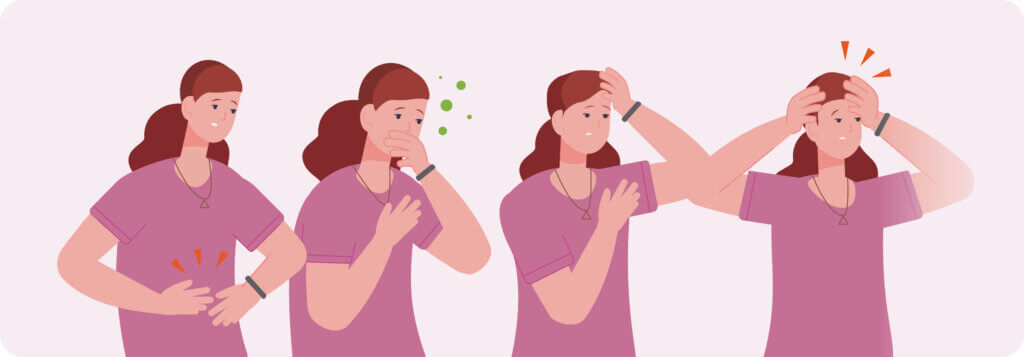
The injections can cause:
- Nausea
- Vomiting
- Diarrhoea
- Constipation
- Stomach pain
- Indigestion
- Tiredness
- Dizziness
- Hair loss
- A fast heart rate
- Headache
- Low blood pressure
Some people experience intense nausea, vomiting or diarrhoea with GLP-1s and this can lead to dehydration. This is especially risky if you are prescribed diuretics as part of your PH treatment as it could lead to kidney injury. The elderly are at a higher risk of dehydration in this way. Plus, vomiting may risk you bringing up PH medication you have taken.
Nausea, vomiting and diarrhoea are all really common side effects of PH medications. So, if you are experiencing them from GLP-1s at the same time, this may limit your specialist team progressing the dosage increases of your PH medications – compromising the impact of your PH treatment.
Your PH team will be able to provide anti-sickness medications, but ideally these wouldn’t be prescribed long-term. Adding more drugs into your regime to combat side effects, known as ‘polypharmacy’, is not ideal.
Ultimately, if you can’t stomach your PH medicines because of this injection, then it probably isn’t right for you.
If you develop side effects on weight loss injections, then report these to your local GP.

The impact on vision
Some of the weight loss injection medications can very rarely cause sudden changes in vision, usually occurring in one eye at a time. This is also a known rare side effect of the PH drugs sildenafil and tadalafil. Always contact your specialist centre if you have a change in vision.
The impact on blood pressure
As weight loss is the desired outcome of GLP-1s, your blood pressure will naturally come down with your weight. People living with PH tend to already have low blood pressure, caused the drug treatments – so there is a risk of it falling so low that you increase the risk of dizziness, falls, and even perfusion of certain organs.
Eating and your PH medications
Some drugs that you take for your PH will need to be taken with food. If your appetite is limited through the GLP-1 medication, you should take extra care to plan your eating around the PH treatments to ensure you can take them.
If you have diabetes alongside PH
If you live with diabetes alongside your PH, it is vital that you speak to your diabetes team before starting a GLP-1 medication. This is because you are at a higher risk of hypoglycaemia – where your blood sugar falls dangerously low – and this can be caused by not eating enough.
Common symptoms of hypoglycaemia include sudden dizziness, sweating, shaking, increased heart rate, anxiety, confusion, tingling lips, and pale skin.
The risk of pancreatitis
There is a risk of patients taking weight loss injections being at an increased risk of an inflamed pancreas.
If you experience the signs of pancreatitis – severe sudden abdominal pain (particularly after eating), nausea and vomiting, fever, and increased heart rate – you should seek urgent medical attention.
If you need anaesthetic
If you are taking GLP-1 medication, you must always inform your medical team if you are undergoing a procedure than involves anaesthetic – particularly general anaesthetic.
For safety reasons, you are always advised to fast before general anaesthetic to ensure your stomach is empty. GLP-1s are known to cause ‘delayed gastric emptying’, which may mean your stomach still contains food at the time of administering the anaesthetic, even if you have fasted for the advised period.
If you’re lying down for a long time for the procedure, there’s a high risk that you can aspirate (bring up what’s left in your stomach) into your lungs – and that’s particularly dangerous for people with pulmonary hypertension.
The effect on contraceptives
GLP-1 medication can reduce the effectiveness of oral contraceptives, so it is advised to use an additional method (such as condoms), especially following a dosage increase. This is especially important for women with PH, where pregnancy is deemed very high risk.
GLP-1 medications should not be taken if you are pregnant or breastfeeding.
Administering the medication
GLP-1 medication is injected via a pen, so if you take subcutaneous medication for your PH (such as Treprostinil) you should make sure you inject into a different area to avoid site pain. This is also the case if you inject any other subcutaneous drugs, such as insulin for diabetes.
ACCESSING GLP-1 MEDICATIONS SAFELY
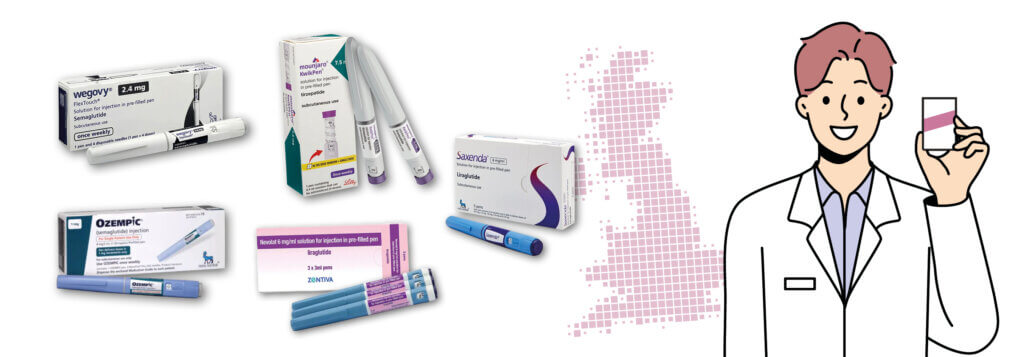
It is not easy to access these medications via the NHS, so many people choose to obtain them privately. GLP-1s are prescription-only medicines, meaning they can only be prescribed by a healthcare professional. It can be dangerous to purchase these drugs through unregulated sellers such as beauty salons or via social media. All licensed GLP-1 medications are provided as pre-filled injection pens, so if it is any other form, it is likely to be counterfeit and potentially unsafe.
All online pharmacies must be registered with the General Pharmaceutical Council (GPHC) and their registration number can be found on their website, usually at the bottom. You can use this number to check they are registered by visiting pharmacyregulation.org/registers.
It is vital that you consult with your PH team before making a decision to start these medications. It’s also important to let the prescriber know you have pulmonary hypertension – this could be your GP, or the online pharmacy you obtain the treatment through. Be aware they may not know what pulmonary hypertension is, which is why it’s even more important that you talk to your specialist team too.
When completing forms and questionnaires to access the medication through an online pharmacy, always be honest with your answers. These prescribers do not have access to your medical files, so your truthful answers are essential to ensure safe prescribing.
Weight loss injections should not be used on their own. Lifestyle changes, such as a reduced calorie diet and staying physically active, should also be adopted while taking – and after stopping – these medications. You can find advice on this at nhs.uk/live-well.
OUR EXPERIENCES OF GLP-1 MEDICATIONS AND PH
Four PHA UK members share their stories of taking different medications…

“I do feel better than before I started it”
Cathy is 60 and lives in Wolverhampton. She was diagnosed with PH in 2020. Cathy has Type 2 diabetes and began taking Mounjaro on NHS prescription for around 18 months ago, after being referred to a diabetic weight management clinic.
“Everyone kept telling me I’d feel better if I lost weight, but I can’t be very active with having PH, congenital heart disease, and being on oxygen – so I had no idea what I could do.
The minute I try to do any exercise I struggle. So, the only way I could make a difference was with diet, which was why my hospital specialists suggested the Mounjaro.
The first thing I noticed was the change in my appetite. It wasn’t huge beforehand because of my health and the menopause, but it got smaller when I started with the weekly injections.
I’ve still been able to enjoy food, but just in smaller portions, and I’ve had to get my head around the idea of not wasting it.
I did have side effects to begin with, which was mainly an upset stomach. Last year I started taking probiotics each day as capsules, and that’s definitely helped.
The Mounjaro helped me feel fuller more quickly, and I didn’t want sweet things so much, but that has died off a little now.
I didn’t want to lose weight too quickly as I don’t think it’s good for you. In the first year I lost 8-9kg (around one-and-a-half stones) but since then it plateaued and it’s crept up a little recently. So I pushed for a review, saw the specialist last month, and I’m due to pick up a slightly increased prescription – so fingers crossed.
Even though I’m feeling a little frumpy from gaining a few kg back, I do feel better than before I started it.
Losing weight has improved my mobility, given me a bit more get-up-and-go and enabled me to listen to what my body is telling me when I eat.”
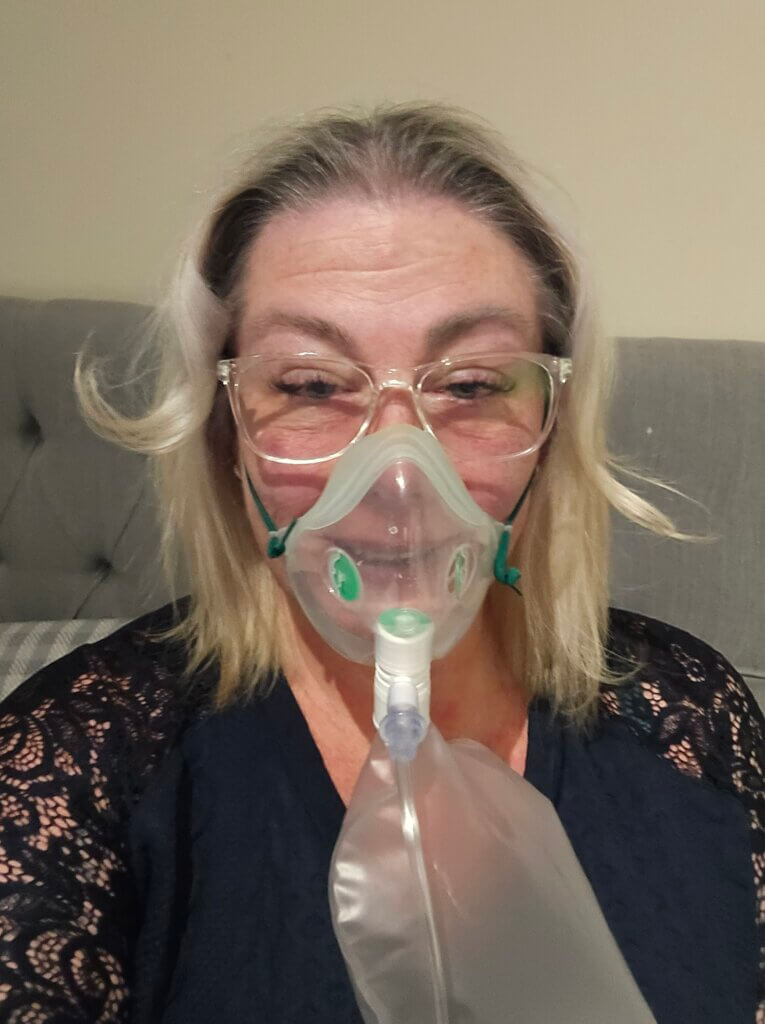
“I’ve had some horrible side effects”
Clare is 45 and lives near Liverpool. She was diagnosed with PH in November 2023 and started taking Wegovy five months ago, with the goal of losing enough weight to be considered for a double lung transplant.
“I weighed 138kg (21 stones) when I started with Wegovy, and was advised by my PH team that I needed to get down to 80kg to be eligible for assessment for a double lung transplant. They suggested trying Wegovy to get there.
Over 50kg is a lot to lose but I wasn’t fazed as I’m quite a stubborn person. I was determined to do it as I’m only young, and it broke my heart to think about having to tell my nieces and nephews that I wouldn’t survive.
I lost 25kg (four stones) on my own before starting the Wegovy, and since then I’ve lost another 12-13kg (two stones). I’ve had some horrible side effects from it though, so have now stopped taking it.
I was sick pretty much every time I ate, even though it was just a small amount of food, and I had terrible stomach pains. Trying to get to the bathroom quickly was difficult, especially because I’m on oxygen 24/7 and have to use the stairlift to get up there. My head felt heavy, and I generally just never felt well on it.
I used to dread injection day each week, as the side effects were always worse just afterwards. I’d inject at 10pm so I was asleep for the first few hours, but as soon as I tried to even drink water the next morning it would come straight back up.
I see all these people on social media doing so well on it, and losing loads of weight, but it just hasn’t agreed with me. My PH team have been really supportive through it all, and my specialist nurses would call regularly to check up on me and offer anti-sickness medication if I needed it.
I did consider trying Mounjaro instead, but the dosage is higher and I just don’t want to risk feeling even worse. When I started on the Flolan for my PH it took a long time to get to the dose I needed so I think I’m sensitive to medications.
I wasn’t able to get the Wegovy on prescription, so I had to pay for it privately, which wasn’t easy as I can’t work. The price went up as the dosage increased, so the first month was £79 and it was over £200 by the final month.
Although I’ve lost 41kg (six stones) in total I don’t think I look that different. I do feel better though; I’d say my breathing is a bit better and I can walk a little bit further. I’ve set myself a goal of September to get down to the weight needed for a transplant assessment and I’m determined to do it. Going back to the Wegovy will be a last resort though.”

“The improvement I feel is very real”
Maxine (not her real name) is 44 and lives between the UK and the United Arab Emirates. She was diagnosed with PAH in September 2021 and began taking Ozempic six months ago.
“I started low-dose Ozempic after discussion with my PAH team. By the time I started, I had already lost a significant amount of weight through gradual lifestyle changes, so this was not about rapid weight loss.
From a PAH perspective, the most important thing is that I have remained clinically stable, with no worsening of breathlessness, chest symptoms, dizziness, or exercise tolerance, and I have stayed on my full PAH treatment throughout.
What feels most significant to me, though, is that I have genuinely felt better since starting it. My energy levels are better, day-to-day life feels easier, and my overall sense of wellbeing has improved. While it is always difficult to tease apart cause and effect, I personally do believe Ozempic has played a role. That may be directly, indirectly through weight loss and improved metabolic health, or as part of a wider positive shift in cardiovascular efficiency. It may well be a combination of all of these, but the improvement I feel is very real.
I am very aware that PAH is a condition where symptoms alone do not tell the full story, so my medical team and I are focused on objective monitoring. I had a right heart catheterisation in July 2025, before starting Ozempic, and I am scheduled to have another one soon, which should provide a useful comparison to see whether there have been any measurable haemodynamic changes over time.”
“It’s made such a difference for me”
Jo is 53 and lives in the Shetland Islands. She was diagnosed with PH in 2019 and started taking Mounjaro 18 months ago.
“I weighed around 184kg (29-and-a-half stones) when I began the Mounjaro. I’ve always had a big appetite, and I’m an emotional eater. I put a lot of weight on as an adult when I had my five children, and because of my health issues.
I had tried slimming groups, and accessed hospital dietician and weight loss services, but nothing seemed to work for me. I’ve always found it difficult sticking to diets, as I always felt hungry. I’d lose a little bit but then go back to my old habits – and it would go back on again.
I’d heard about Mounjaro through the media, although it wasn’t talked about then as much as it is now. I assumed you’d get them from your GP, but weight loss injections are still not available on the NHS in my part of Scotland – even now – so I had to get it on a private prescription online.
As soon as I started taking it my appetite was cut completely. I wasn’t thinking about food at all, and at times back then I was living on just three chicken breasts and a bowl of soup a day.
Within a month of starting the injection, even though I hadn’t lost a huge amount of weight by that point, I was able to walk further than I had done in years. The difference it’s made for my mobility is just amazing.
I had a few side effects at first, including constipation and a bit of nausea, but it was all manageable – nothing compared to pregnancy – and the benefits totally outweighed any discomfort.
The dosage was increased each month, and by the end of each month I’d start getting my appetite back, but it would then go again with the bigger dose. I’m on the highest dosage now and the food suppression has eased off a bit, but I can still control it. I can definitely sit and eat more now then when I started the Mounjaro back in 2024, but I don’t have the raging appetite I did before.
I make better food choices now too. Before the medication, breakfast would always be two slices of toast with loads of butter, but I just don’t fancy things like that anymore. Breakfast instead is lean chicken sausages with tomatoes, or eggs.
I used to really crave crisps and could eat a whole box of them at night. I still have them occasionally, but now I take a few from a packet and then put them down. I certainly couldn’t do that before! I still enjoy food, just not the stodgy and fatty things from before.
It’s not that I’ve learned more about nutrition – I always knew what I should be eating, but I just couldn’t do it. That’s the thing that’s changed.
I’ve lost 51kg (eight stones) so far, and I’d like to lose another 63kg (ten stones). But I’m paying around £300 a month for the Mounjaro now. It’s gone up quite a lot, and I don’t know how I’m going to continue paying for it. I’m just really hoping I’ll be able to access it on the NHS up here soon.
I’d describe the medication as life-changing. It means I can go out for a walk, go and meet friends, and do ‘normal’ things.
I couldn’t do anything before, and it dragged me down. I struggled to even walk the flat two minutes to my local shop without stopping at least two or three times due to breathlessness and pain in my back. I struggled with stairs and had to rest on my bed a lot. Now I manage fine, I’m just a bit breathless, but I can do it.
My doctor is really impressed with the improvements in my overall health, and I hope things get even better as I lose more weight.
A lot of people don’t like to talk about taking weight loss medication, and I know that everyone is different and it doesn’t work as well for all. But I’ve been shouting from the rooftops because it’s made such a difference for me.”
If you would like to share your own experiences of PH and GLP-1 medications, please email media@phauk.org