Four decades of care
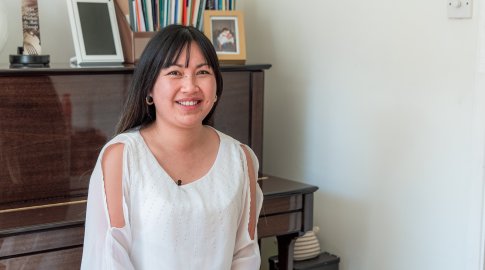
After arriving in the UK from Poland 40 years ago, Dr Joanna Pepke-Zaba dedicated her career to advancing pulmonary hypertension care, helping to transform Royal Papworth Hospital’s service into one of the world’s leading centres and contributing to more than 260 published research papers.
Stepping away from clinical practice has not been an easy decision, but while her role is changing, her commitment to patients remains as strong as ever…
Interview conducted summer 2026
This isn’t your first experience of retirement, is it Joanna?
“It’s not! In fact, you ran an article about it in an edition of this magazine when I retired from my leadership role at Royal Papworth. I spent 16 years there as Director of the service, before reducing my NHS hours to do more research and international work.
Since then, I’ve been working there part-time as a consultant, and when a full-time consultant was appointed, it paved the way for me to retire again from direct patient duties. I feel the legacy has been very well-funnelled.”
You’re not stepping away completely are you. How will you still be involved in patient care at the PH service?
“I am lucky enough to still take part in multi-disciplinary team (MTD) meetings, which is when staff from the different disciplines at the unit meet to discuss individual patients and make joint decisions on their treatment and care.
There are three of these meetings each week, and I am giving my time to them for free. So, whilst I am no longer employed by the NHS, and this isn’t patient-facing work, I am still able to use my expertise to influence care and do what I love. This is my voluntary contribution to the specialist service, and I hope this is a good solution for everyone.”
What brought you to the UK all those years ago?
“After graduating from the University of Warsaw, Poland, I received a grant to carry out research in pulmonary hypertension in the UK, so my husband and I moved across. It was only meant to be for a year, but here we are four decades later.
I’ve treated thousands of patients during this time, and many of them remain deep in my memory – particularly those in the early years, before we had established treatments, when they showed such bravery in their fight against the disease.”
You must have seen a lot of changes in PH over the years…
“There was no pulmonary hypertension unit at all at Royal Papworth when I arrived in 1986. There was a research programme, run by Professor Tim Higginbottom, and as part of that a few PH patients were treated with a view to lung and / or heart transplantation.
Patient numbers started to build and what came next was a ‘golden age’ for Royal Papworth, as we started to make some major discoveries in PH. This was a time when the first prostacyclin (epoprostenol) drug was given to PAH patients [prostacyclins also include treprostinil, iloprost and selexipag].
When the first oral drug, bosentan, and then sildenafil, started being prescribed in the early 2000s, it completely changed the horizon. Treatments were improving hugely and we appointed our first Registrar at the unit – Professor Luke Howard, who is now the Lead Clinician for the PH service at Hammersmith Hospital. Many experts who are now consultants or professors have passed through the service at Royal Papworth and it’s very nice to see everyone doing so well.”
Royal Papworth Hospital started performing pulmonary endarterectomy surgery (pioneering surgery to clear clots in patients with chronic thromboembolic pulmonary hypertension – CTEPH) in 1996. How important was that for you as Director of the PH service?
“The introduction of this surgery was definitely a standout moment for me, and so much has changed with it since, including a huge improvement in survival rates.
The next stage for our CTEPH procedures came in 2013 when a group of our experts went out to Japan to learn about balloon pulmonary angioplasty [BPA – a minimally-invasive procedure used in some people to clear clots]. Originally, it was seriously difficult to transfer the concept of BPA to Europe, and specifically to the UK, but we managed to get it commissioned.”
Who has inspired you most in your work over the years?
“Dame Cicely Saunders inspired me very early on in my career. She is the founder of the hospice movement, and as a student I worked as a volunteer at her hospice, St. Christopher’s Hospice in London. It was an honour to meet her, and we had some valuable long discussions.
Patients have been a constant source of inspiration to me
Since then, patients have been a constant source of inspiration to me – how they deal with the diagnosis of a potentially fatal disease, how they respond to treatment, how they cope with life modified by the disease, and how we can further improve their care and quality of life. At the end of the day, it’s not just about giving them tablets or offering an operation; it’s about a whole holistic approach.
I’ve been inspired by the trust that others have shown in me – not just as a doctor, but as someone who can conduct important research and present on the international stage. I very frequently met people who were constantly moving forward knowledge on PH, and that encouraged me to do the same.”
With such a full career, there must be many things you are proud of. What stands out?
“I know this question is about my professional life, but honestly, I am most proud that I managed to raise a family around my career. I benefited from a huge amount of support that allowed me to work like a mad person but have a stable background at home. It can be a very hard balance, especially as a woman.
I am also very proud – and fond of – the generations of my fellows who have invested their time in pulmonary hypertension research and are now providing excellent care to the patients and continuing to improve our knowledge / research in PH.
Retiring will be a big change, because my work has been my passion for so long – but I am looking forward to the future, still with some research and editorial commitments.”
It must be a time of much reflection. If you could speak to all of the patients you have met and treated over your 40-year career in PH, what would you say?
“I would simply say thank you. Thank you for putting your trust in me, listening to me, and allowing me to treat you. You were my life’s inspiration!”
Retiring will be a big change, because my work has been my passion for so long