
Non-prescription medicines and PH
Do you know which non-prescription medicines you should avoid or take with caution if you have PH?
This feature has been produced with expert input from the pharmacy teams at the Scottish Pulmonary Vascular Unit and the Sheffield Pulmonary Vascular Disease Unit. Always speak to a GP, pharmacist, or specialist PH centre if you are unsure whether a medication is safe.
Treating nasal congestion
‘Natural’ sprays such as Olbas oil and SteriMar are all safe to use if you have pulmonary hypertension.
Some PH drugs cause blood vessels in the nose to be dilated, and this can result in nosebleeds. If there is any irritation in the nose, such as loose skin, it can cause the vessels to burst – so using a saline spray reduces the risk of bleeds.
Steroid nasal sprays, such as Beconase, are also very effective at reducing nasal congestion but they shouldn’t be used for more than seven days.
Active nasal sprays, such as Sudafed and Otrivine, contain decongestants and should not be used for more than three days.
Decongestants in general should be avoided when you have pulmonary hypertension as they can make the blood pressure in the lungs higher. However, there is less systemic absorption (the passage of a drug into the circulatory system) from a nasal spray so it’s ok to use this for a very short period of time.
Always tell your specialist centre if you have used an active nasal spray.
❗If you have a dry nose due to oxygen use, you can buy lubricants to help, such as optilube and K-Y (these are also prescribable). However, it’s vital that you avoid products that contain paraffin, such as Vaseline, as they are very flammable.
❗Decongestants taken through the mouth (oral decongestants) should not be used if you have pulmonary hypertension.
They contain pseudoephedrine and phenylephrine and can raise the pressures in your pulmonary arteries. These products include cold and flu relief products and off-the-shelf household names such as Sudafed, Day and Night Nurse, and Lemsip. If you are unsure whether a product contains pseudoephedrine or phenylephrine, please check with the pharmacist.
Treating a headache
Paracetamol is the go-to treatment here, and it’s recommended you try this before anything else.
Non-steroidal ant-inflammatory drugs (NSAIDs), such as ibuprofen, naproxen and aspirin, are generally not recommended for people with respiratory conditions because they may make your breathing worse if they are used long-term. However, they are safe to take for very short periods (no more than three days), if you are experiencing acute pain.
Co-codamol is safe to take if you have PH, but it can make you feel drowsy, nauseous or constipated. Do not take paracetamol alongside co-codamol as it is already contained in the product.
Cooling treatments, which are applied directly to the forehead, can be used very safely if you have PH.
Treating nausea and heartburn
Products that neutralise acid in the stomach, such as Gaviscon, Peptac and Rennies, do not interact with PH-specific drugs but they do interact with many others. Check with a pharmacist that you can take it with your other medications.
Products that reduceacid in the stomach, like Nexium (esomprazole) can only be obtained over the counter.
Treating loose stools (diarrhoea)
Loperamide (commonly bought as Imodium) is recommended here, and there are no known interactions with PH-specific drugs.
If you have loose stools for a prolonged period, you can risk becoming dehydrated. As someone with PH, it’s really important to get a fluid balance and it is possible that you will be taking diuretics (water tablets). Combined with loose stools for a long time, this increases the risk of kidney injuries, so please see your GP if you think you are becoming dehydrated.
Treating constipation
There are no laxatives that you need to avoid if you have PH.
Treating rashes and itching
Antihistamines and skin creams do not need to be avoided if you have PH, but if you choose something that contains hydrocortisone (a steroid) this can weaken the skin barrier if it is used too much. Anti-fungal creams such as Daktarin have some interactions with oral tablets (although not PH-specific ones) so make the pharmacist aware of other medication that you’re taking.
Herbal remedies
Remember that ‘natural’ doesn’t always mean ‘safe’ so if you are considering taking a herbal medication, always speak to your specialist team first.
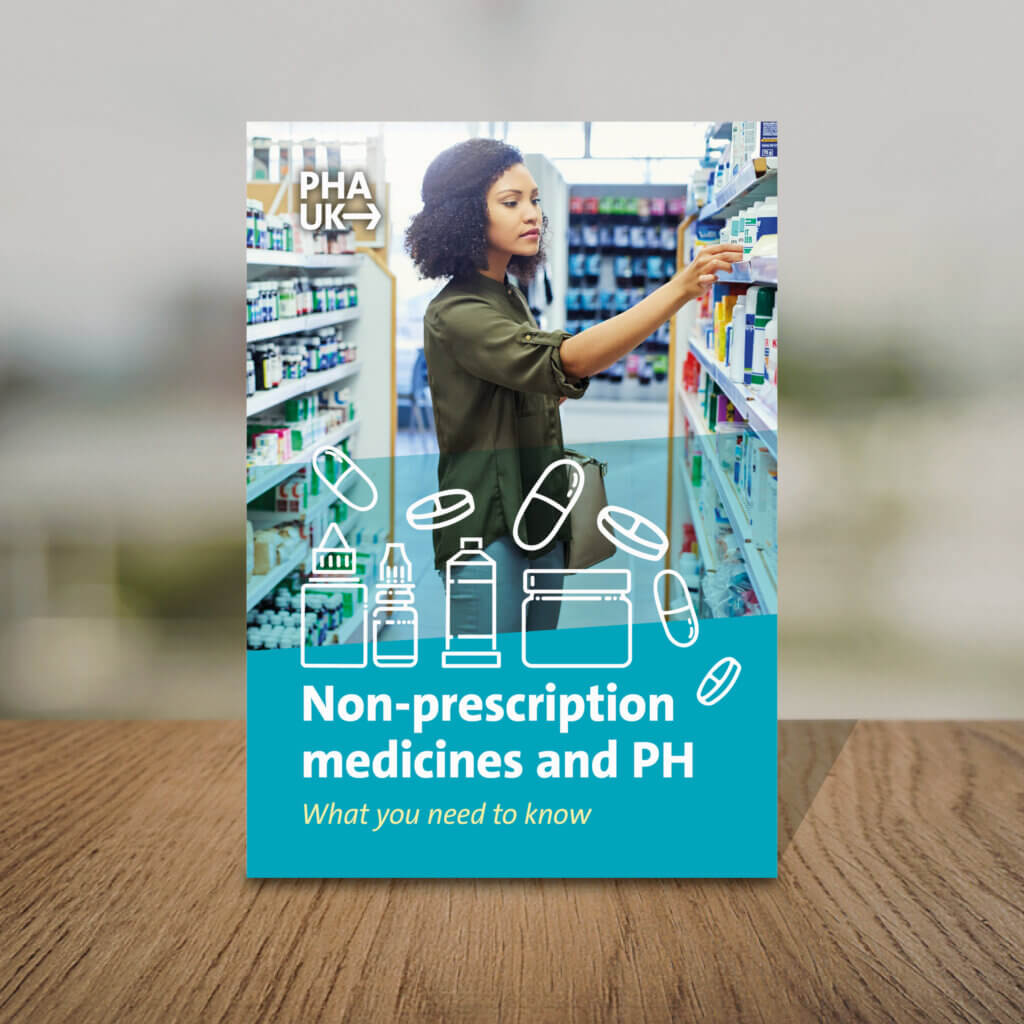
You’ll find more advice on non-prescription medications and PH in our free leaflet. Order here.
All information in this article is correct at the time of publication, December 2025.