Dealing with my double diagnosis
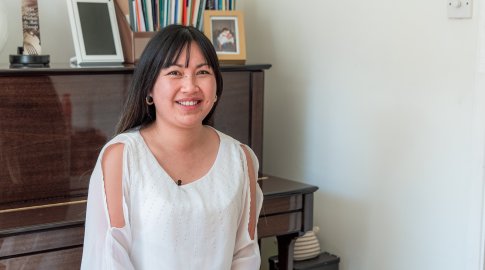
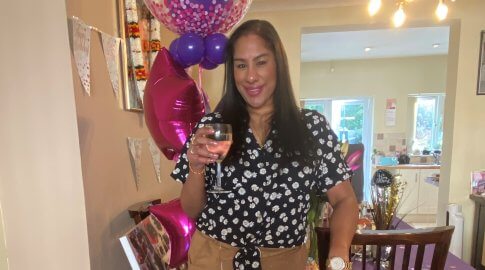
At 25 years old, Pooja was shocked to discover she had congenital heart disease – followed swiftly by a diagnosis of PH. She shared her experiences just a few months after being told about her health conditions…
“I had lived with a hole in my heart since birth without ever knowing about it, until the start of this year.
I was always a child that never liked walking, and my parents just assumed I was lazy – which is what I thought myself for a long time. When I was 16, I got into fitness and start doing a lot of cardiovascular exercise, which didn’t cause me any problems until I got COVID-19 in 2022. It affected my breathing, and after I’d recovered from the virus, it still felt different.
The exercise I was able to do before suddenly felt harder and even going up the stairs started to become more difficult. I didn’t think that much of it until I was on a staycation in Winchester with my friends in November last year. It’s a hilly city and two of my friends, who both have asthma, pointed out my breathing sounded worse than theirs. They encouraged me to book an appointment with my GP so as soon as I got home, that’s what I did.
He didn’t seem worried because my heartbeat was normal and I told him I was exercising, but he agreed to a blood test and chest X-ray to reassure me. These tests showed the right side of my heart was working too hard and I had lung pressures, so I was referred for more investigations. I had a CT and MRI scan just before Christmas, and in January, it was time for an echocardiogram. The day afterwards, I was told I had a large hole in my heart.
More tests followed over the next few weeks, and I was eventually sent for a right heart catheterisation. I had no idea what the procedure even was, and when the consultant then told me it showed I had pulmonary hypertension, I didn’t know what that meant either. I just remember hearing the words ‘there is no cure’ and being told it advances, and the last resort is a lung transplant. That’s all I can really recall from the conversation.
Since then, life has been about trying to adjust to both diagnoses. I don’t think I’m fully there yet, but slowly I’m trying to get there.
I was told about my heart condition on January 17th and I remember the date as it was just a few days before starting my new job. I was so worried about what it would mean but my new manager was really supportive. I felt ok with everything, but then when I got told I had pulmonary hypertension on top of that the worry really set in.
I’m on dual therapy – both as tablets – and that seems to be helping. The mental aspect of having PH has more of a strain on me than anything physical though. I do speak to my family and friends about how I feel but it’s hard for others to understand when they are not going through it themselves.
I work mostly from home, which helps in terms of managing my symptoms. I was working as a waitress before this, and it was very difficult as I was on my feet and often the only person serving an entire restaurant. My job now is demanding, but in a different way. It gives me a routine and keeps my mind off other things.
My managers and someone in HR are the only people at work who understand the in-depth details of PH. I just tell everyone else that the pressures in my lungs are very high and that affects my everyday life, and I give some examples of symptoms.
The biggest symptom I experience with PH is exhaustion. This can be brought on just by concentrating or standing up for a long period of time, and it’s difficult trying to maintain the energy that other people in their twenties have.
When I get exhausted it impacts my breathing and can bring on chest pains. The fatigue goes alongside the exhaustion. It doesn’t matter how much I sleep; I wake up already feeling tired – and that doesn’t make sense to most people.
It means I must re-evaluate a lot of plans I have with friends, as I know I can only manage a short amount of time at social gatherings. And if I do something one day, I have to take the following day to rest. Planning is difficult, because I don’t know how I will feel from one day to the next, and again, that’s hard for people to understand.
I do enjoy spending time with my friends though. I take the train to see them in London when I can, and we do things that aren’t too hectic. We will find somewhere to sit and catch up, often in a restaurant.
Resting definitely helps me, and I try to live life at a slower pace. I read a lot, and I enjoy being in nature. I’m quite reserved anyway, and I’ve never been a night owl, so the diagnosis hasn’t massively changed my lifestyle. It has, however, made me worry a lot about the future.
Being with my dog, Dwight, has helped me deal with everything. He is a chocolate flat coat retriever, and he seems to know when I’m struggling. With everyone else he’s hyperactive, but he’s different around me. Even before I knew what was wrong, he’d look back at me whilst we were out walking as a family. It was like he just knew, even when no-one else did.
One of my nurses told me about the PHA UK. I watch a lot of the charity’s videos, which show other people talking about their experiences. It helps because I’d never heard of this condition before. I follow other people with PH on social media and that helps too as I know I’m not alone with the diagnosis.
I wanted to share my experiences in this way because PH can be so misunderstood compared to other diseases, like cancer. It’s an invisible illness so more people telling their stories can only be helpful.”